Valmy
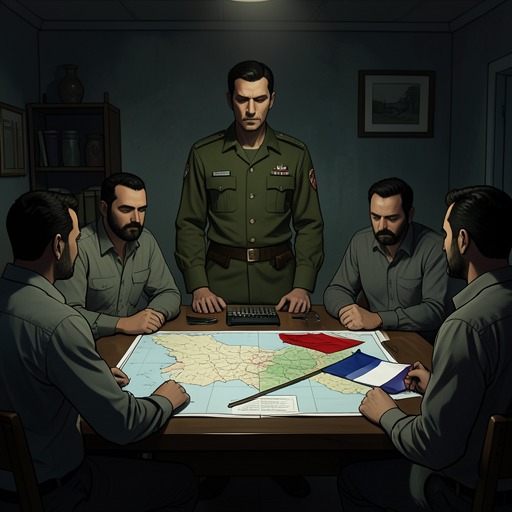
The Day of the JackalValmy is a former schoolmaster who acts as a clandestine communications link for the OAS circle surrounding Marc Rodin and the Jackal. His importance lies in the narrow interval his warnings create: he can pass on fragments of the police investigation, but cannot halt the manhunt, and the calls that make him useful also lead the police to identify and arrest him. When Claude Lebel turns Valmy’s telephone into a trap, the informant’s role reverses: his line becomes a means of deceiving the Jackal.
Identity and Cover
Valmy lives in a cramped, disorderly bachelor flat in Paris, far removed from the comfortable life he once had. He has been removed from his post as headmaster of a lycée at Sidi-bel-Abbes and has lost the fine house and two manservants that came with it. Books, newspapers, magazines, and manuscripts crowd the flat; unwashed crockery fills the sink. The former headmaster has adapted to these diminished circumstances, but his thoughts are occupied by something beyond the untidy room.
At dawn, he reads a newspaper story about OAS leaders sheltering in a Rome hotel. He leaves his flat and takes a taxi to the Gare du Nord, but, once dropped in the forecourt, walks away from the station and enters an all-night café. The detour gives the impression of an ordinary commuter moving through the city, while placing him near a public telephone. His cover is not merely a name: the work of a schoolmaster continues inside the flat, where Claude Lebel later finds examination papers being corrected. The ordinary task helps conceal the clandestine one.
Messages to the OAS Network
From a telephone near the Gare du Nord, Valmy places a call to the Rome hotel where Rodin and the other OAS leaders are staying. He sends a short, coded report: the Jackal’s operation has been exposed, Viktor Kowalski was captured, and Kowalski confessed before dying. The message carries the urgency of a warning, but its compressed wording also shows the limits of what Valmy can convey over a call that may be intercepted. He pays and leaves quickly, disappearing into the commuters streaming out of the station.
The warning reaches Rodin, who understands its danger but does not believe the police can identify the Jackal quickly. Rodin reasons that the authorities are looking for a tall blond foreigner among more than a million foreigners in France, without a name, face, or known passport. He also recognizes that the Jackal might be forewarned if he calls Valmy. The informant is therefore more than a messenger: his contact with the fugitive could determine whether the Jackal stays, leaves, or learns that the police have begun to close in. Rodin expects that Valmy would tell the Jackal to abandon the operation, but the story does not show Valmy giving that order.
The Manhunt Reaches His Line
The police initially know neither the assassin’s name nor much about his identity. Lebel asks foreign police forces to search their records for an experienced political contract killer, while the authorities in France review their own files. The breakthrough comes not from a complete profile of Valmy, but from the monitored telephone call to the Rome hotel. An international switchboard operator has been instructed to report calls to that number, and, though he connects the call before recognizing it, he listens in and reports its contents. The information makes Valmy’s role legible to the investigators: the unknown source who warned the OAS leaders has a route into the city’s public telephone network.
The Jackal’s movements bring Valmy back into direct contact with him. At the Château de la Haute Chalonnière, the Jackal makes his routine morning call to Paris, beginning with the familiar signal “Ici Chacal.” Valmy answers, “Ici Valmy,” and tells him that the police have found the car. The discovery forces the Jackal to abandon his plan to stay at the château for two more days and leave sooner than intended. During the call, a soft click on the line gives the Jackal reason to suspect that someone may have been listening. The exchange thus delivers the warning Valmy is meant to provide while also exposing the vulnerability of the channel on which their relationship depends.
Valmy continues to pass along information as the police pursue the Jackal’s assumed identity as a Danish parson. Jacqueline Dumas calls him and reports that investigators know about the disguise and are checking the Paris hotel registration cards for Danish guests, with collections at midnight, two, and four in the morning, before visiting each person. Valmy’s brief acknowledgment ends the call; the evidence does not show what further instructions, if any, he passes to the Jackal. The episode nevertheless establishes how quickly the manhunt’s discoveries can travel from police procedure to the fugitive through Valmy’s network.
Arrest and the Reversal of the Signal
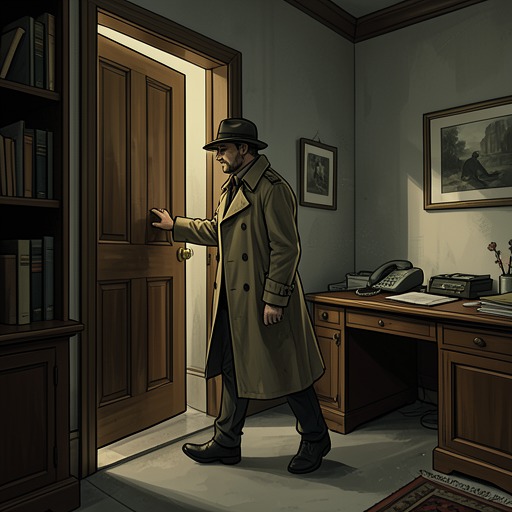
The police trace Valmy through the tapped telephone. At seven in the morning, four men arrive at his flat while he is preparing breakfast. He recognizes them without needing to be told who they are. A mild-looking investigator restrains the uniformed men from lunging at him, identifies him as Valmy, and explains that the telephone has been tapped. Valmy shows no visible emotion, steps aside to let them enter, and asks to get dressed. The arrest is quiet and controlled; the contrast with his urgent calls makes the flat’s domestic routine part of the scene’s tension.
After the others take Valmy downstairs, Lebel stays behind and looks through the papers on which Valmy had apparently been working. They are ordinary school examination papers. Lebel realizes that Valmy would ordinarily have to remain in the flat throughout the day to stay beside the telephone in case the Jackal calls. He waits for the line to ring and answers it himself, using Valmy’s place in the network as bait. When the Jackal asks what is new, Lebel replies that the police have lost the trail in Corrèze. The Jackal is perplexed: he reasons through the discoveries the police must have made, from the driver in Egletons to the body at the château and the Renault in Tulle, and concludes that the reassuring answer cannot be the whole truth. Valmy’s capture has therefore removed one warning link, but Lebel’s impersonation converts the same communication channel into a means of misleading the fugitive.